Making the difference.
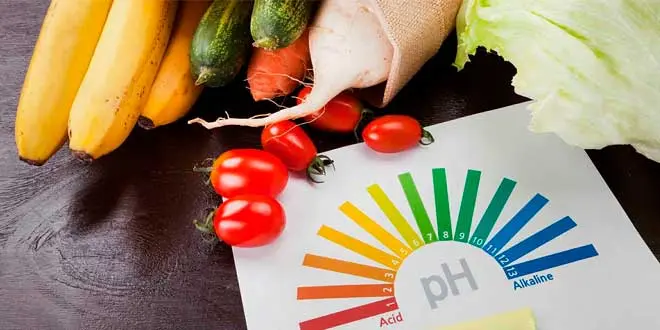
pH makes the difference because it controls nutrient absorption, prevents deficiencies, avoids nutrient lockout, and ensures strong, uniform, and highly productive growth in any crop.
When we talk about successful cultivation, most growers immediately think about nutrients, sunlight, irrigation systems, or water quality, yet hidden beneath all these familiar concepts there is a quiet number that determines whether crops thrive or struggle, and that number is pH. In agriculture as a whole, and especially in hydroponics, pH is a foundation for growth, productivity, and the proper use of every other input. It is the gateway that allows plants to reach their genetic potential, to absorb what they need, and to transform water and nutrients into healthy, high-quality produce. Without the correct pH, even the best fertilizers, the cleanest water, or the most advanced technology cannot deliver the expected results.
In traditional soil cultivation, pH plays a complex role. Soil is a living medium containing microorganisms, organic matter, minerals, and chemical interactions that determine how nutrients become available to roots. When the pH is off balance, the soil begins to “lock” nutrients, keeping them stuck in the ground instead of reaching the plant. This means that farmers can be fertilizing correctly and still see poor results. A balanced pH, however, creates a friendly environment where roots can freely access nutrients, which leads to stronger stems, greener leaves, thicker root systems, and faster crop cycles. When pH is unstable, plants begin to show problems such as yellowing leaves, slow growth, weak structure, and multiple nutrient deficiencies, even if those nutrients are present in the soil.
In hydroponics, the importance of pH becomes even greater because there is no soil to act as a buffer or correction mechanism. The plant receives everything directly from the water, which means that pH has instant impact on nutrient availability. If the pH is not within the correct range, essential nutrients such as nitrogen, phosphorus, potassium, calcium, and magnesium remain in the solution but cannot be absorbed by the plant. This is why growers who use hydroponic systems are constantly monitoring, adjusting, and stabilizing pH levels. Precision becomes the difference between failure and success, and between an average harvest and a premium one.
You may also be interested in reading about: Electroconductivity, the Invisible Signal That Reveals How Well Your Plants Are Feeding
Balanced pH in hydroponics leads to crops that grow faster, cleaner, more consistent, and with better flavor, better texture, and better nutritional quality, because plants receive nutrients in their most efficient form. Stable pH reduces waste by ensuring that fertilizers are fully used instead of accumulating or being flushed away. This makes hydroponics not only a productive technology, but also a more sustainable, economical, and environmentally responsible method of food production.
Understanding pH is understanding plant behavior. Changes in coloration, leaf size, production speed, root development, or overall vigor are often direct reflections of how well the plant is managing nutrient absorption. When growers learn to “read” pH, they learn to anticipate problems before they occur, correct mistakes quickly, and produce crops with outstanding uniformity. For modern agriculture, especially in urban spaces and controlled environments, pH is no longer a technical detail but a strategic tool.
At Todo Hydro, we believe that responsible cultivation begins with knowledge, and that monitoring pH is not just one step in the process, it is the foundation of sustainable and successful growing, whether in large hydroponic farms or small urban gardens. With the right tools, accurate measurements, and consistent control, growers can transform their crops and unlock the full potential of hydroponics, proving that in the search for innovation every detail counts, and pH is the detail that drives true productivity, sustainability, and growth.
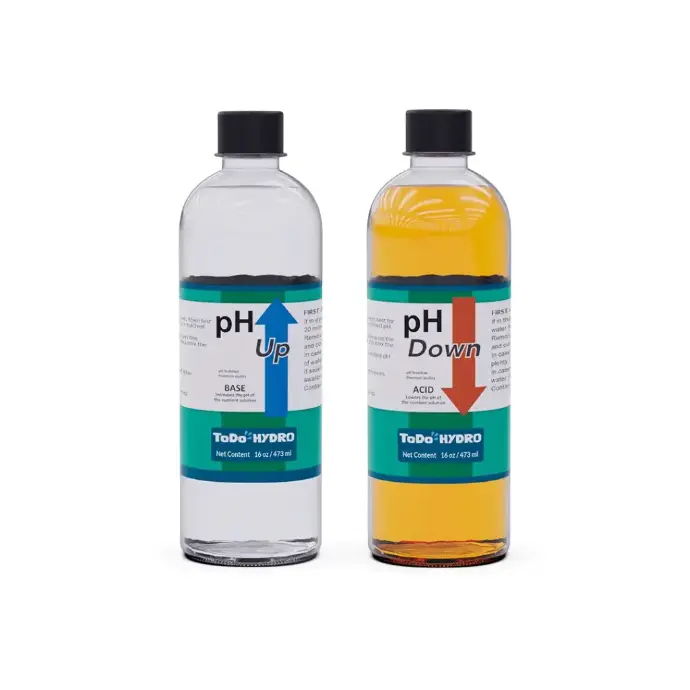
pH Up and pH Down
Your trusted allies to protect your plants and keep nutrients working at their best.